Every morning before anything else.
The monitor.
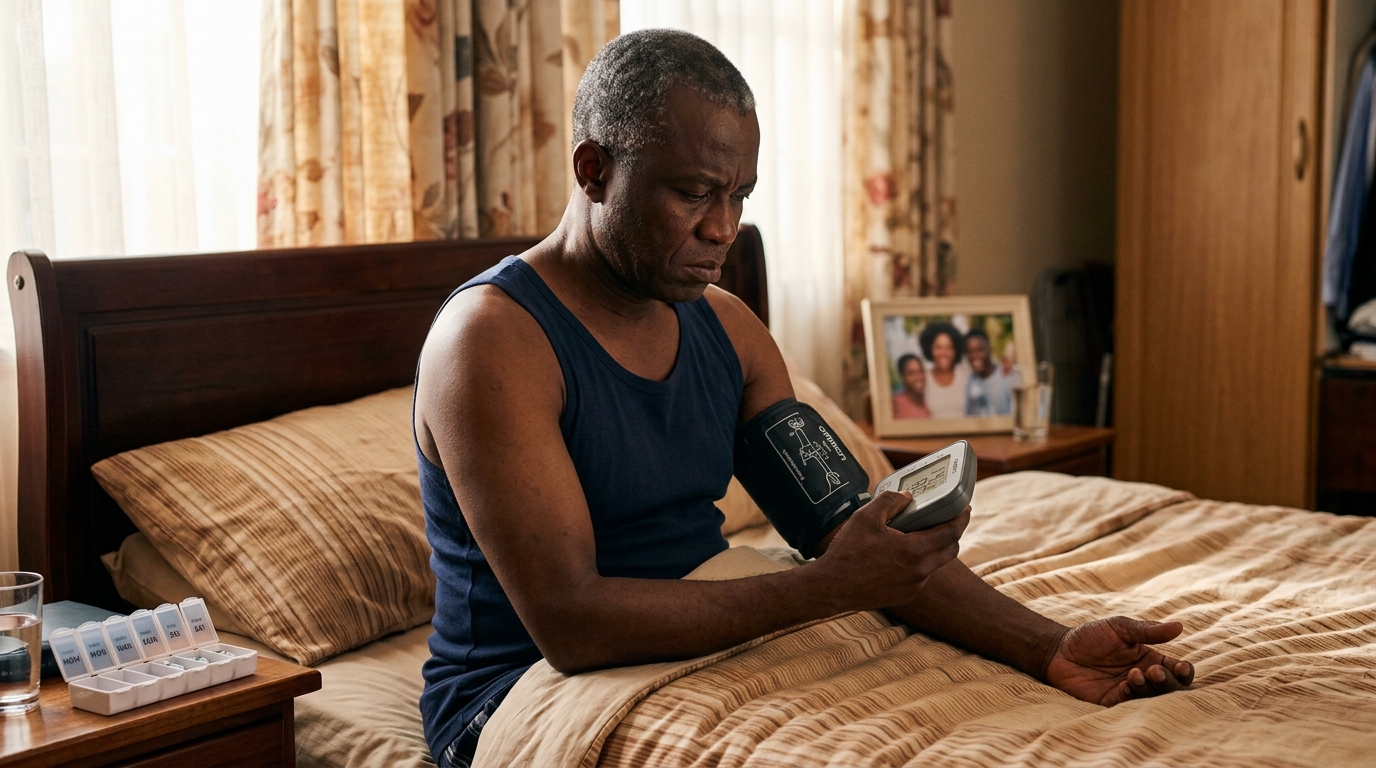
You sit on the edge of your bed. You wrap the cuff around your left arm. You press the button. The machine hums. The cuff tightens. You wait. And in the 30 seconds between pressing the button and seeing the numbers, you hold your breath. Because the numbers on that small screen determine the texture of your entire day.
138/88. Manageable. You exhale. You can go to work without the low hum of anxiety that follows you into every meeting.
156/98. Your stomach tightens. You took the amlodipine last night. You ate carefully. You avoided the suya. You drank water instead of malt. And the number is still 156. The medication was supposed to bring it down. It brought it down from 170. But 156 is not controlled. 156 is the number that makes you calculate: how far am I from a stroke?
178/110. This is the number that makes you sit very still. This is the number that makes you call your doctor. This is the number your father saw before his stroke at 58. You are 52. The gap between you and your father's age is closing. The numbers on the monitor are the distance measurement.
You check the monitor every morning because the alternative is not knowing. And not knowing is worse. But knowing is its own kind of punishment. Because the numbers fluctuate despite the medication, despite the diet changes, despite everything you've tried. The monitor doesn't lie. And some mornings, the monitor says: what you're doing is not enough.
If the monitor is the first thing you reach for every morning, if 156 makes your stomach tighten, if you calculate the distance between your numbers and your father's stroke, if the medication manages but does not control, if nobody has told you what to do beyond the prescription, keep reading.
My name is Ibrahim. I'm 52. I live in Lagos. I manage a bank branch.
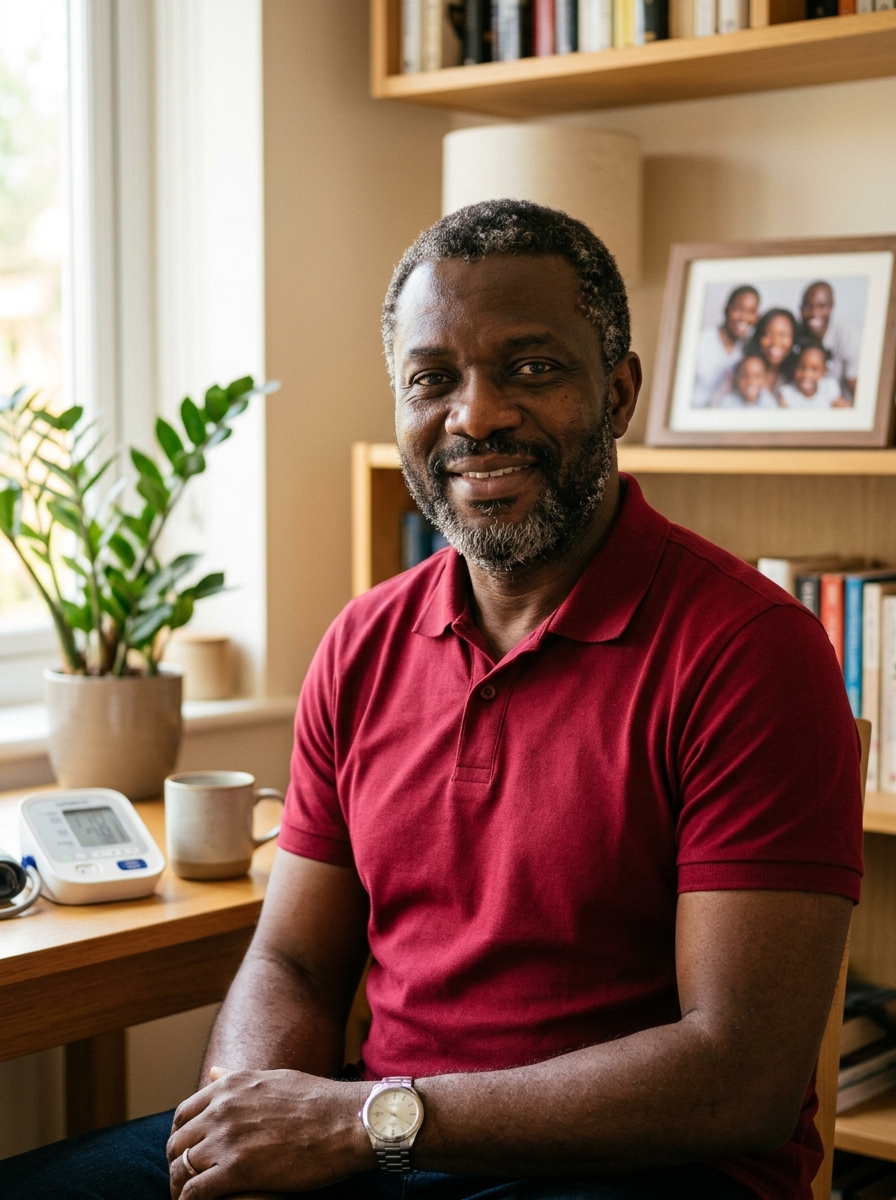
And for 7 years, the monitor was my morning judge. Until a 69-year-old retired Hausa traditional wellness practitioner named Baba Musa showed me what the amlodipine, the dietary advice, and the specialist consultations were all missing: the daily practice that supports stable blood pressure from beneath the medication.
The Morning the Monitor Read 178
January 2026. A Monday. I had taken my amlodipine the previous night as usual. I had eaten a light dinner. No salt excess. No processed food. Nothing that should spike the numbers.
I sat on the bed. Wrapped the cuff. Pressed the button. Waited.
178/110.
I stared at the screen. Pressed the button again. Maybe a misread. The cuff tightened. Released.
176/108.
Not a misread. My blood pressure was 176 despite 7 years of medication. My father's pressure was 180 the morning of his stroke. I was 4 points away from the number that changed my family forever.
I sat very still in my bedroom. My wife was in the kitchen preparing breakfast. My children were getting ready for school. And I was sitting on the edge of a bed doing arithmetic with my life: 178 today. 180 killed my father's left side. I am 52. He was 58. The gap is 6 years and 4 points of systolic pressure.
That morning I called my cardiologist. He adjusted my dose. Added a second medication. He said: "The amlodipine alone isn't sufficient. We need combination therapy." I asked: "Is there anything ELSE I should be doing? Beyond the medication?" He said: "Reduce salt. Exercise more. Manage stress." The same advice from every doctor for 7 years. Reduce salt. Exercise more. Manage stress. As if I haven't been trying. As if my father wasn't trying when his pressure was 180.
Seven Years of Medication That Manages Without Controlling
Amlodipine. 10mg daily for 7 years. ₦2,500/month. ₦210,000 in total. The calcium channel blocker that brought my pressure from 170 to 140-150. But 140-150 is not controlled. The target is below 130/80 according to current guidelines. The amlodipine brings me close but not there. And the side effects: swollen ankles by evening, occasional dizziness when standing quickly.
Second medication (losartan). Added in January 2026 after the 178 reading. ₦3,500/month additional. Combination therapy brought the average down to 135-145. Better. But still not consistently below 130. And new side effects: occasional dry cough, fatigue in the afternoon.
Salt reduction. I reduced. I stopped adding salt at the table. I read labels. But Nigerian cooking — the stews, the soups, the seasoning cubes — is built on sodium. My wife adjusted the cooking. But at work lunches, at family gatherings, at every social occasion where Nigerian food is served, the sodium is there. Complete salt avoidance in a Nigerian diet is practically impossible without eating separately from everyone else.
Herbal preparations. Three different "blood pressure" preparations from market sellers. First: ₦6,000. "Hausa pressure herb." Taken for 4 weeks alongside medication. No measurable change on the monitor. Second: ₦10,000 from a different seller. "Guaranteed BP normalisation." 3 weeks. The monitor disagreed. Third: a ₦15,000 preparation recommended by a colleague. 6 weeks. My average dropped by 3 points, which was within normal daily fluctuation and not attributable to the herb. ₦31,000 on preparations that the monitor could not validate.
Supplements. CoQ10. Magnesium. Potassium. Fish oil. ₦8,000/month at peak supplement use. 6 months. ₦48,000. My cardiologist said: "Some of these have modest evidence. But they won't replace your medication." They didn't replace it. They didn't meaningfully supplement it either. The monitor showed no consistent improvement.
Exercise. I joined a gym. 3 times per week for 3 months. My pressure during exercise elevated (normal for exercise) but my resting pressure improved by approximately 5 points. Then work intensified. The gym sessions dropped to once a week, then stopped. The 5-point improvement reversed within 6 weeks. Exercise works. But maintaining a gym schedule alongside a 12-hour banking workday in Lagos is not sustainable.
Cardiologist consultations. ₦20,000 per visit. Quarterly. ECG: ₦8,000. Blood work (kidney function, lipid panel): ₦15,000. Annual total: approximately ₦100,000 on monitoring and consultation. All of it MONITORING. Watching the numbers. Adjusting the medication when the numbers spike. None of it teaching me what to DO between appointments to keep the numbers stable.
Total in 7 years: over ₦500,000. Two medications managing but not controlling. Herbal preparations the monitor could not validate. Supplements with modest evidence and no visible impact. An unsustainable gym routine. And the monitor. Every morning. Still showing numbers that make me calculate the distance from my father's stroke.
The Hausa Elder Who Asked About My Morning, Not My Medication
March 2026. A business trip to Kano. A client's family compound. Among the elders: Baba Musa. 69 years old. A retired traditional wellness practitioner who had spent 40 years in Hausa communities helping people manage blood pressure using a combination of traditional Hausa dietary wisdom, specific daily practices, and herbal support alongside modern medication.
I mentioned my blood pressure casually. In Nigeria, "I have pressure" is something men over 45 say the way they say "traffic was bad." Commonly. Baba Musa did not respond commonly.
"Tell me about your morning," he said. Not your medication. Not your numbers. Your morning.
I described it. Wake at 5:30. Check the monitor. Take the amlodipine with water. Rush to dress. Drive to the office in Lagos traffic (when in Lagos) — 45 minutes of frustration. Arrive at the desk. First meeting by 8:30. Coffee by 9.
He listened to every detail. Then:
"Your morning is raising your blood pressure before your medication has time to lower it. The monitor check creates anxiety. The rush creates cortisol. The traffic creates sustained stress response. The coffee stimulates further. By the time you sit at your desk, your body has been in fight-or-flight for 90 minutes. Your amlodipine is fighting your morning. And your morning is winning."
"In the Hausa tradition, blood pressure is not managed only with what you TAKE. It is managed with what you DO. The daily practice. The morning sequence. The foods that support the vessels. The breathing that calms the nervous system. The medication addresses the chemical pathway. But the nervous system pathway — the one that spikes your pressure when you see the monitor, when you sit in traffic, when your boss calls an unscheduled meeting — the medication does not address that. I do."
He taught me a 3-part method he had refined over 40 years of practice in Hausa communities where hypertension prevalence is among the highest in the country:
Part 1: The Morning Calm Protocol. A specific 15-minute morning sequence — done BEFORE checking the monitor — that activates the parasympathetic nervous system (the body's calm-down system) and reduces the cortisol spike that the morning routine creates. Specific breathing, movement, and mindfulness practices drawn from Hausa wellness tradition. When the nervous system is calm BEFORE the day begins, the medication works with a calm body instead of fighting a stressed one.
Part 2: The Blood Pressure Food Method. Specific Nigerian and Hausa foods that support vascular health and blood pressure management — and the specific common Nigerian foods that spike pressure despite appearing harmless. The method doesn't eliminate Nigerian food. It restructures which foods, in what combinations, at what times, to support the medication's effect rather than undermine it. Real food. Real Nigerian cooking. Restructured for pressure management.
Part 3: The Traditional Vascular Support Preparation. A specific preparation using Hausa market ingredients that supports vascular flexibility and reduces the arterial stiffness that drives resistant hypertension. Clinical literature confirms that certain natural compounds support endothelial function and arterial compliance. Taken twice daily alongside prescribed medication. Under ₦2,000/month.
"21 days of consistent practice alongside your medication," he said. "The morning protocol calms the nervous system immediately. The food restructuring reduces the dietary sodium and inflammatory load that works against the medication. The preparation supports the vessels from beneath. By Day 7, the monitor readings will begin stabilising. By Day 14, the spikes will reduce. By Day 21, your average systolic should be meaningfully lower than your current medicated average. The medication will work better because your body will stop fighting it."
Days 1-6: The Monitor Still Fluctuated
I started on the Monday after returning to Lagos. Morning calm protocol: 15 minutes before checking the monitor. Food restructuring at every meal. Preparation twice daily alongside my amlodipine and losartan.
Day 3: monitor read 148/92. Same as before. No change.
Day 6: 142/88. Slightly lower. But within normal daily fluctuation. Nothing I could attribute confidently to the method.
I stood in my bathroom with the preparation and thought: "A Hausa elder in Kano has given me a morning breathing exercise and told me to restructure my meals. I've already spent ₦500,000. How is 15 minutes of breathing going to move what 2 medications couldn't?"
Baba Musa's voice: "The breathing is not treating your blood pressure. It is treating your NERVOUS SYSTEM. Your nervous system elevates your blood pressure every morning through cortisol and adrenaline. The medication fights the elevation. The morning protocol prevents the elevation. When the body stops spiking, the medication only needs to manage the baseline — not the baseline PLUS the morning stress. Check the numbers at the same time each day. The trend matters, not the individual reading."
I tracked. Day 6 average: 143/89. Pre-method average (previous month): 148/93. A 5-point systolic reduction in 6 days was within the range Baba Musa described for Week 1. I continued.
Day 21: The Monitor Read 128
A Wednesday morning. Morning calm protocol completed. I wrapped the cuff. Pressed the button. Waited.
128/82.
I pressed it again. 130/80.
Below 130 systolic. For the first time in 7 years of medicated management. The target my cardiologist had set — below 130/80 — achieved not by a third medication, not by a new pharmaceutical intervention, but by supporting the medication with the daily practice that addresses what medication cannot: the nervous system, the dietary inflammation, and the vascular stiffness.
The 21-day average: 133/84. Down from a pre-method average of 148/93. A 15-point systolic reduction while on the same medication at the same dose.
My cardiologist reviewed my home monitoring log at the next appointment. He looked at the trend line. "Ibrahim, your numbers have improved significantly. What changed?" I said: "Dietary adjustments and a daily wellness routine." He said: "Whatever you're doing, continue. These are the best numbers I've seen from you in 7 years." He didn't know about Baba Musa. He just saw the trend. And the trend said: the medication plus the daily practice produces what the medication alone never could.
What Changed Beyond the Numbers
The monitor. I still check it every morning. But the 30 seconds of waiting no longer produce the stomach-tightening anxiety. Because the numbers have stabilised. The fluctuation range has narrowed from 138-178 to 126-140. The spikes that used to appear without explanation have reduced to rare occurrences tied to identifiable causes (extreme work stress, significant dietary deviation). The monitor is no longer my morning judge. It is my morning confirmation that the practice is working.
The morning. The 15-minute calm protocol has changed how I begin every day. I am no longer in fight-or-flight before 7am. The cortisol surge that used to accompany the morning rush is managed before it begins. I arrive at work calmer. My team notices. My decisions are clearer. The blood pressure benefit is one dimension of what the morning protocol provides.
The food. I eat Nigerian food. Full meals. At family gatherings. The restructuring taught me which combinations support pressure management and which undermine it. I don't eat separately. I eat strategically. My wife learned the method and adjusted our home cooking without the family noticing a difference in taste. The food is the same. The structure is different.
The fear. My father had a stroke at 58. I am 52. For 7 years, the distance between our ages narrowed every birthday. The fear was constant. The fear is not gone. But it is managed. Because the numbers that measure my risk are now consistently in the controlled range for the first time since diagnosis. The gap between my numbers and my father's numbers has widened. 128 is not 180. The distance is no longer closing.
I Wasn't the Only One
My colleague at the bank. 48. On amlodipine for 3 years. "Ibrahim, the morning protocol was the breakthrough. I was checking the monitor, seeing 150, panicking, and the panic was RAISING my pressure further. The cycle of monitor-panic-spike was making the medication less effective. The morning calm protocol broke the cycle. My average dropped from 152 to 134 in 3 weeks."
My brother in Kano. 55. On combination therapy for 5 years. "The blood pressure food method showed me I was eating 3 things daily that spike pressure despite seeming harmless: the quantity of seasoning cubes in the soup, the suya spice blend (which contains significant sodium), and the specific palm oil preparation method we use. Changed those three things. Average systolic dropped 8 points in 2 weeks. My doctor reduced my second medication dose."
Same method. Different men. Different medication regimes. Different severities. Same result: the daily practice supports the medication. The nervous system calms. The dietary load reduces. The vessels soften. The numbers stabilise. The monitor stops being a source of fear and becomes a source of confirmation. Alongside your doctor. Always.
Why I'm Sharing This
After my improvement, I asked Baba Musa's permission to document his method. "Baba, there are people checking the monitor every morning and calculating the distance from their father's stroke. People on 2 medications whose numbers still aren't controlled. People spending ₦500,000 on management without anyone teaching them what to DO between appointments. Can I write this down?"
He agreed, with one instruction: "Tell them: this works ALONGSIDE their medication. Not instead of it. The medication is essential. This practice fills the gap the medication cannot fill: the nervous system, the daily food, the vascular support. Both are needed. Together they do what neither does alone. Tell them to continue their medication and attend every appointment. The doctor monitors. The practice supports. Both."
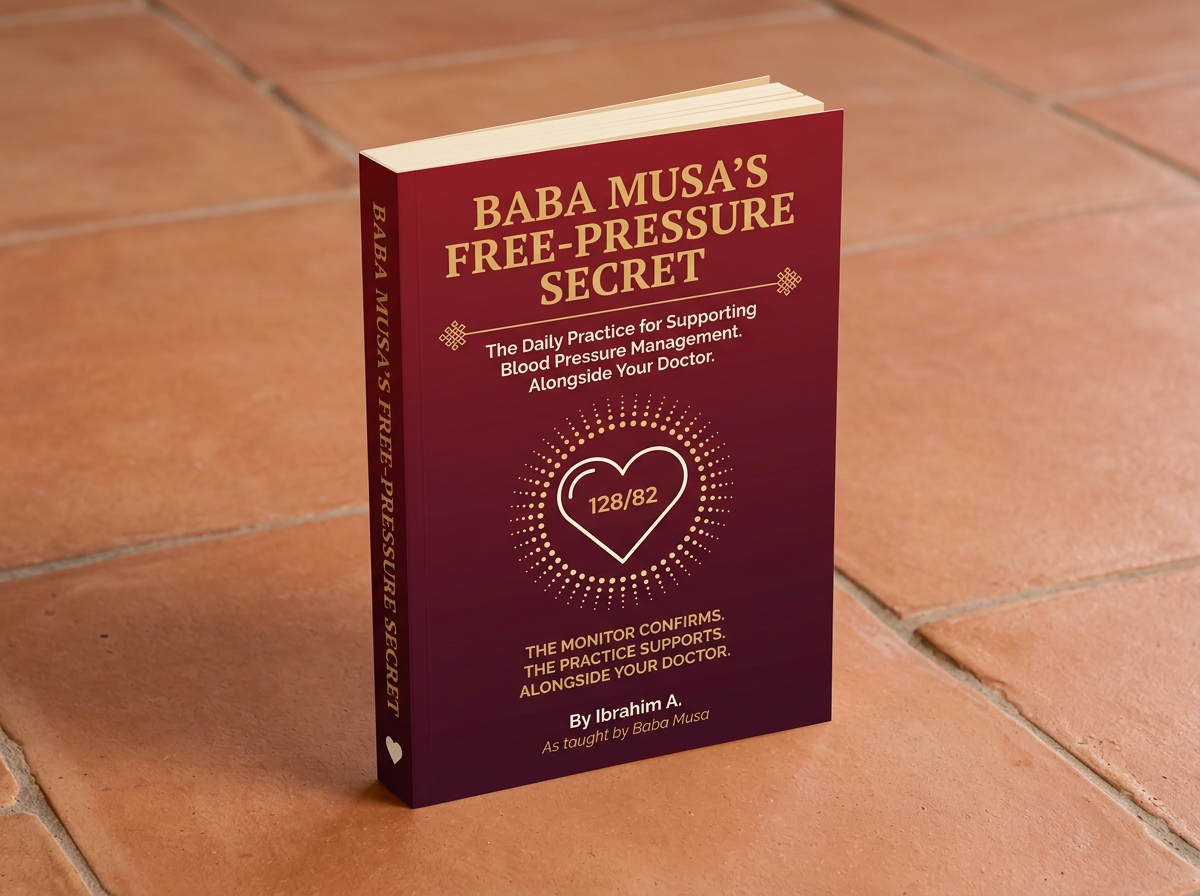
Baba Musa's Free-Pressure Secret
The Hausa Elder's Daily Practice for Supporting Blood Pressure Management
Alongside your medication. The monitor stabilises. The fear calms. The numbers your doctor wants to see.
What Other Nigerians Are Saying
"8 years of amlodipine. Average 148/92. The morning calm protocol broke the anxiety-spike cycle. I was checking the monitor, seeing 150, panicking, and the panic was raising my pressure further. The protocol calms the nervous system BEFORE the check. Within 3 weeks, my average dropped to 134/86. My doctor said these are the best numbers in 4 years."
"Diagnosed 8 months ago. Started on amlodipine. My doctor said 'reduce salt and exercise.' No specific plan. Baba Musa's method gave me the PLAN. The blood pressure food method showed me which traditional Hausa foods support pressure management. I eat tuwo and miyan kuka as always. Just restructured. Average systolic dropped from 152 to 136 in 3 weeks alongside my medication."
"On 2 medications. Average still 145/90. My cardiologist was considering adding a third. Started the daily practice alongside my medications. By Day 21, average was 132/84. My cardiologist reviewed the numbers and said the third medication is no longer necessary. The practice did what a third pill was going to attempt."
"My father. My brother. Both strokes. Both hypertensive. Both on medication that managed but did not control. I was watching my numbers approach theirs. The method gave me what medication alone couldn't: numbers consistently below 130 for the first time since diagnosis. My cardiologist says my cardiovascular risk profile has improved measurably. The distance between me and my family history has widened."
"The swollen ankles from amlodipine were affecting my confidence at work. My doctor said it's a common side effect. The daily practice supported my pressure management so effectively that my doctor reduced my amlodipine dose from 10mg to 5mg. The ankle swelling resolved. My numbers are better on 5mg plus the practice than they were on 10mg alone."
"NHS prescribed ramipril. My BP was 'well managed' according to my GP at 142/90. But I knew 142 wasn't controlled. The morning protocol and food restructuring brought my average to 128/80 within 4 weeks. My GP reviewed and said: 'This is excellent. Whatever lifestyle changes you've made, continue.' He doesn't know about Baba Musa. He just sees the numbers."
Main Method: ₦25,000 value
Bonus #1 (Blood Pressure Food Guide): ₦8,000
Bonus #2 (Daily BP Calm Protocol): ₦8,000
Total Value
₦41,000
You Pay Today
₦9,800
One payment. Lifetime access. Alongside your medication. The monitor stabilises.
Instant download • Both guides included • 21-day guarantee • Alongside your doctor
Plus: 2 Essential Guides
❤️ BONUS #1: The Blood Pressure Food Guide
(₦8,000 Value. Yours FREE)
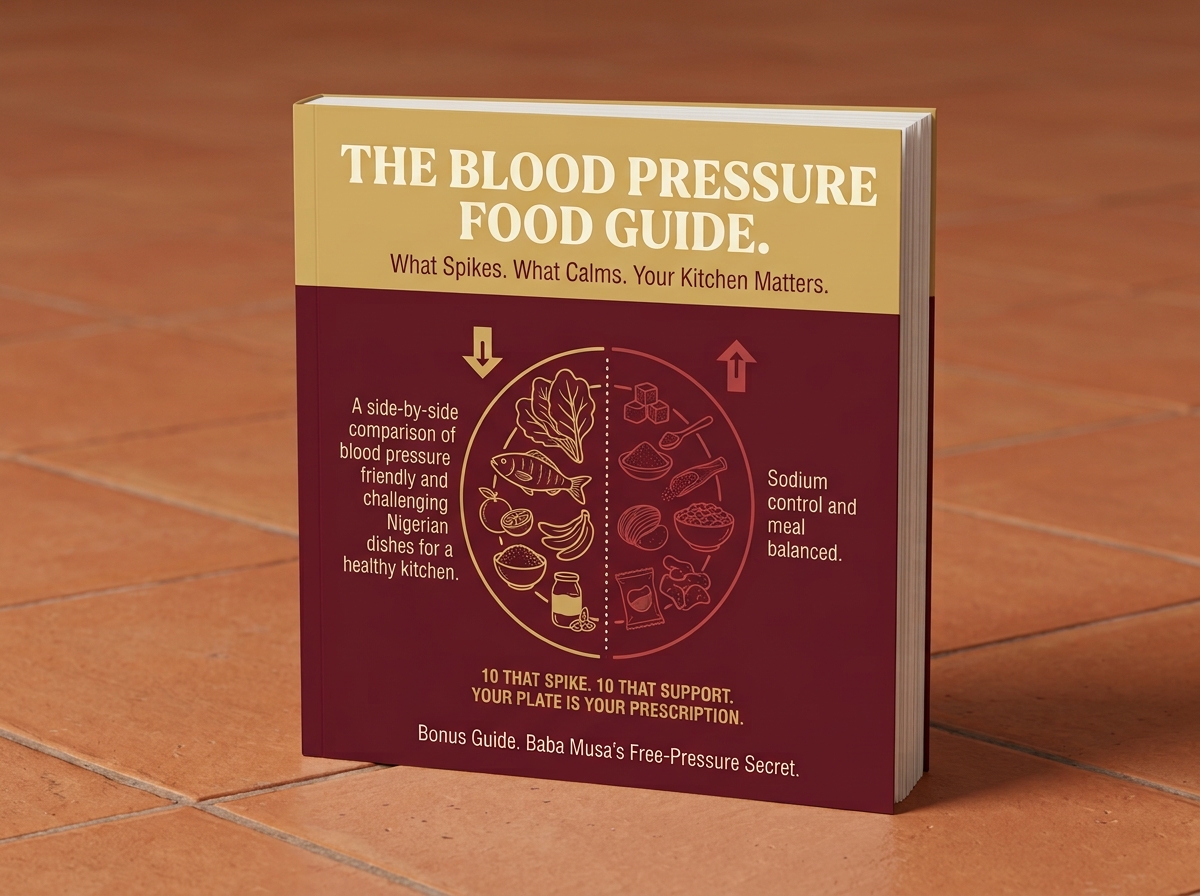
10 common Nigerian and Hausa foods that spike blood pressure despite seeming harmless (including the specific seasoning cube, suya spice, and palm oil preparation method that most Nigerian households use daily). 10 Nigerian foods that actively support vascular health and blood pressure management. The meal restructuring guide for pressure management without eating separately from your family.
❤️ BONUS #2: The Daily BP Calm Protocol
(₦8,000 Value. Yours FREE)
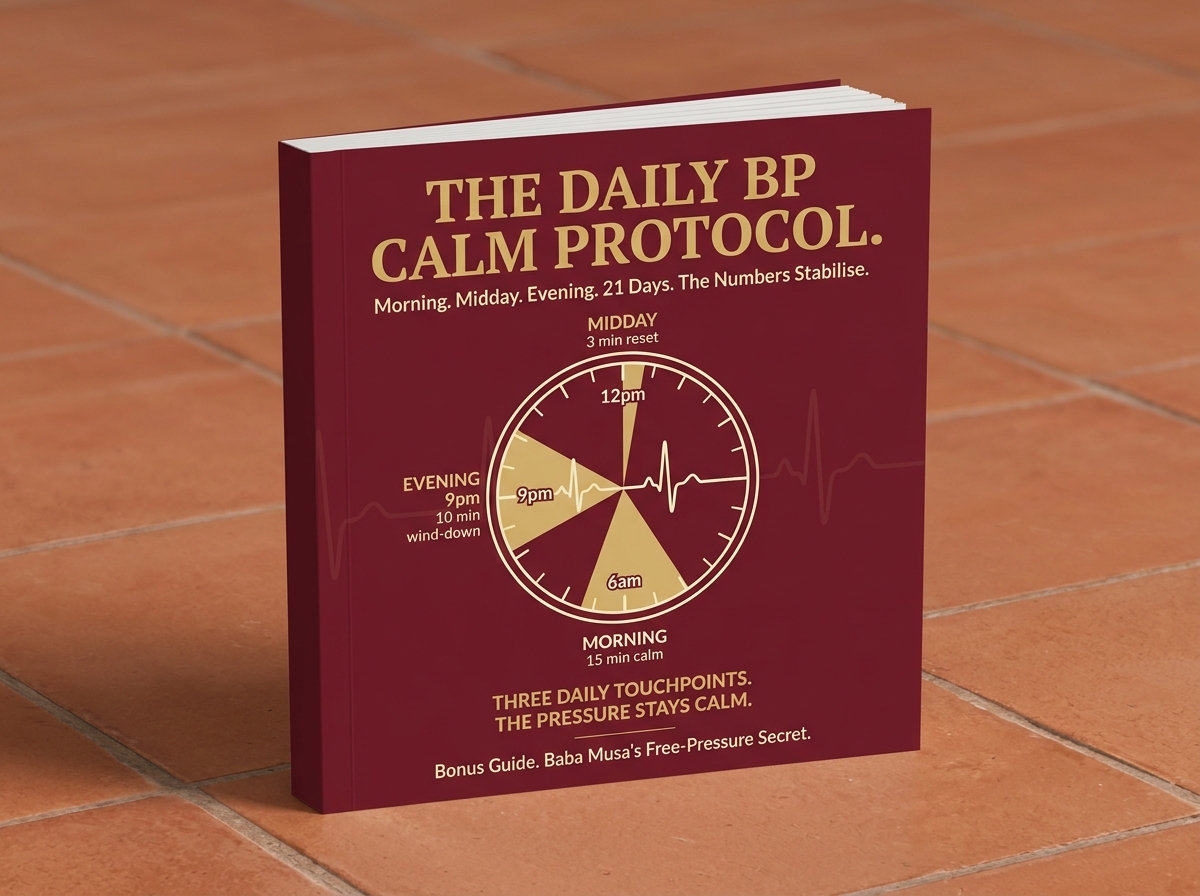
The complete 21-day daily practice printed on a single page. The morning calm protocol (15 min, step by step). The midday reset (3 min, at your desk). The evening wind-down (10 min, before bed). The correct way to measure blood pressure for accurate trend tracking. When to call your doctor immediately. The BP diary template for sharing with your cardiologist.
21-Day Conditional Guarantee
Follow the practice alongside your medication for 21 days. If your average blood pressure trend does not improve measurably, full refund.
You keep both guides regardless.
Your numbers either improve or you pay nothing.
Right Now, You Have a Choice
Another morning wrapping the cuff with anxiety.
Another 156 despite the medication.
Another month closer to the age your father had his stroke.
Another ₦2,500 on medication that manages without controlling.
The medication addresses the chemical pathway. But the nervous system pathway — the cortisol spikes, the stress response, the dietary inflammation — continues working against the medication every day. The numbers fluctuate because the medication is fighting your lifestyle. Without the daily practice, the medication fights alone. And alone, for many Nigerian hypertensives, is not enough.
Imagine 21 days from now:
You wrap the cuff. Press the button. The number reads 128.
Your cardiologist reviews your log and says: "Best numbers in years."
The distance between your numbers and your father's stroke widens.
The monitor becomes confirmation, not anxiety.
₦9,800. 21 days. Alongside your medication. The nervous system calms. The dietary load reduces. The vessels soften. The monitor stabilises. The gap between you and your family history widens.
P.S. #1: What will the monitor show tomorrow morning? Will it be the number that lets you exhale, or the number that tightens your stomach? ₦9,800 and 21 days of daily practice alongside your medication stand between tomorrow's anxious reading and the morning your doctor says "best numbers in years."
P.S. #2: Research published in peer-reviewed Nigerian medical journals confirms that among Nigerians on blood pressure medication, only approximately 13% achieve adequate blood pressure control. That means 87% of medicated hypertensives are in your position: taking the pills, still uncontrolled. The medication is necessary. But for 87% of Nigerians, it is not sufficient. The daily practice fills the gap the medication leaves. ₦9,800 to join the 13% who are controlled.
P.S. #3: Baba Musa is 69. His own blood pressure is 118/76. Not because of superior genetics. Because he has practised his own method every morning for 40 years. "The medication manages the pressure," he says. "The daily practice manages the body that creates the pressure. Both are needed. Together, the numbers your doctor wants to see become the numbers your monitor shows. Every morning. Without the fear." ₦9,800 to stop fearing the monitor.